What Facial Gua Sha Is Actually Good For
Puffiness, Lymphatic Drainage, Sinus Pressure, and Jaw Tension
If you’ve ever woken up with a swollen face, tight jaw, sinus pressure, or that heavy “puffy” feeling around your eyes and cheeks, you already know the face often reflects what the nervous system and lymphatic system are carrying.
This is one of the reasons we include facial gua sha in our Signature Spa Immersion experiences at Sparrow Massage Sedona.
Not because it’s trendy.
Because when it’s done correctly, it can genuinely help people feel lighter, calmer, less congested, and more relaxed in their face and jaw.
What Is Facial Gua Sha?
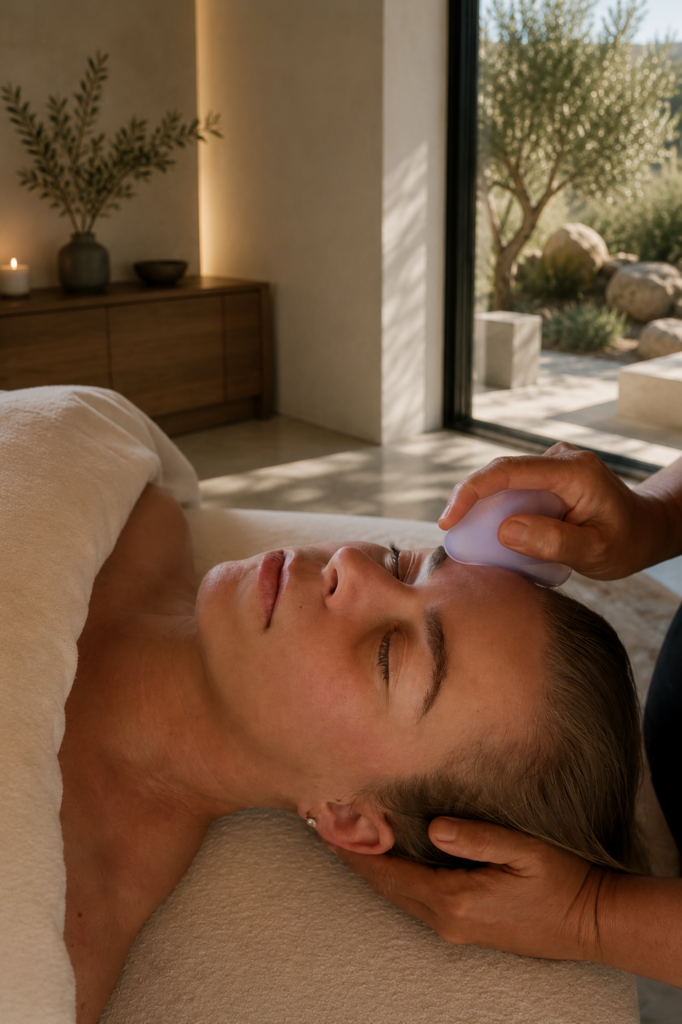
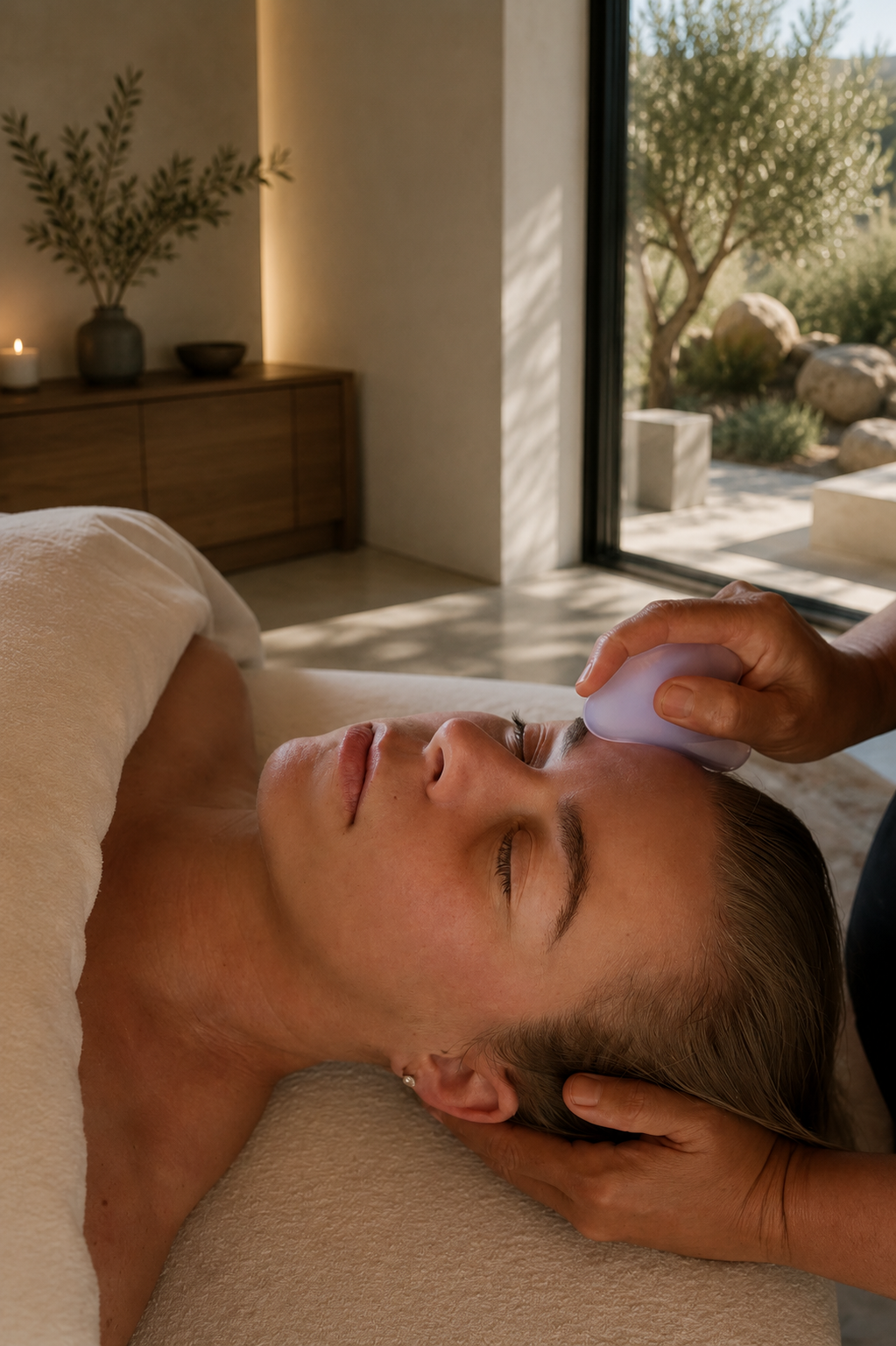
Facial gua sha is a gentle technique rooted in Traditional Chinese Medicine that uses a smooth-edged tool to glide across the skin using slow, intentional strokes.
Unlike aggressive “scraping” sometimes shown online, facial gua sha uses very light pressure designed to support circulation, ease muscular tension, and encourage fluid movement through the lymphatic system.
Research has shown gua sha can significantly increase microcirculation in treated tissues, which may help reduce muscle tension and discomfort.
Modern facial gua sha is commonly used to support:
- Temporary facial swelling after travel, alcohol, stress, or poor sleep
- Facial puffiness
- Jaw tension and clenching
- Sinus pressure
- Fluid retention
- Facial tightness
- Stress-related tension patterns
Why Faces Get Puffy in the First Place
A “puffy face” is often related to temporary fluid retention and sluggish lymphatic movement.
The lymphatic system helps move excess fluid and waste products throughout the body. Unlike the circulatory system, it does not have a central pump like the heart. Movement, breathing, muscle activity, and gentle manual stimulation help lymph move efficiently.
Interestingly, around 200 of the body’s approximately 600 lymph nodes are located in the neck and face.
That’s why techniques that encourage drainage around the jawline, cheeks, neck, and collarbone can create a noticeable difference in how the face feels and looks.
Many people notice:
- Less swelling around the eyes
- More definition through the jawline
- Reduced “morning puffiness”
- Relief from facial heaviness
- A calmer sensation in the sinuses
That said, it’s important to stay realistic. Facial gua sha is not magic, and it does not permanently sculpt the face. Even medical experts note that many benefits are temporary and tied to improved circulation, relaxation, and fluid movement.
But temporary relief still matters, especially when someone is stressed, inflamed, traveling, dehydrated, or holding tension chronically.
Gua Sha for Sinus Pressure and Congestion
One of the most underrated benefits of facial gua sha is how soothing it can feel for sinus pressure.
Gentle strokes around the cheeks, brow, nose, and neck may help encourage drainage and reduce feelings of congestion or facial fullness.
While research is still limited, small studies and clinical observations suggest facial massage may help reduce sinus tenderness and pressure perception.
Many people especially notice relief during:
- Allergy season
- Dry desert climates
- Air travel
- Stress-induced tension headaches
- Chronic facial tightness
The combination of warmth, touch, slower breathing, and fluid movement can create a surprisingly calming effect for the entire face and nervous system.
Jaw Pain, TMJ Tension, and Clenching
This is where facial gua sha becomes especially valuable.
A huge percentage of people unconsciously clench their jaw throughout the day or while sleeping. Stress, anxiety, screen time posture, and nervous system dysregulation all contribute.
Facial gua sha can help soften:
- Tight masseter muscles
- Tension near the temples
- Clenching patterns
- Facial guarding
- Forehead tension
A 2025 randomized controlled trial found that gua sha massage significantly reduced facial muscle tone and stiffness over an 8-week period.
In practice, many clients simply describe it as:
“My whole face finally relaxed.”
And honestly, that matters more than aesthetics.
The Nervous System Component Most People Ignore
One thing rarely discussed online is that facial tension is often emotional and neurological, not just cosmetic.
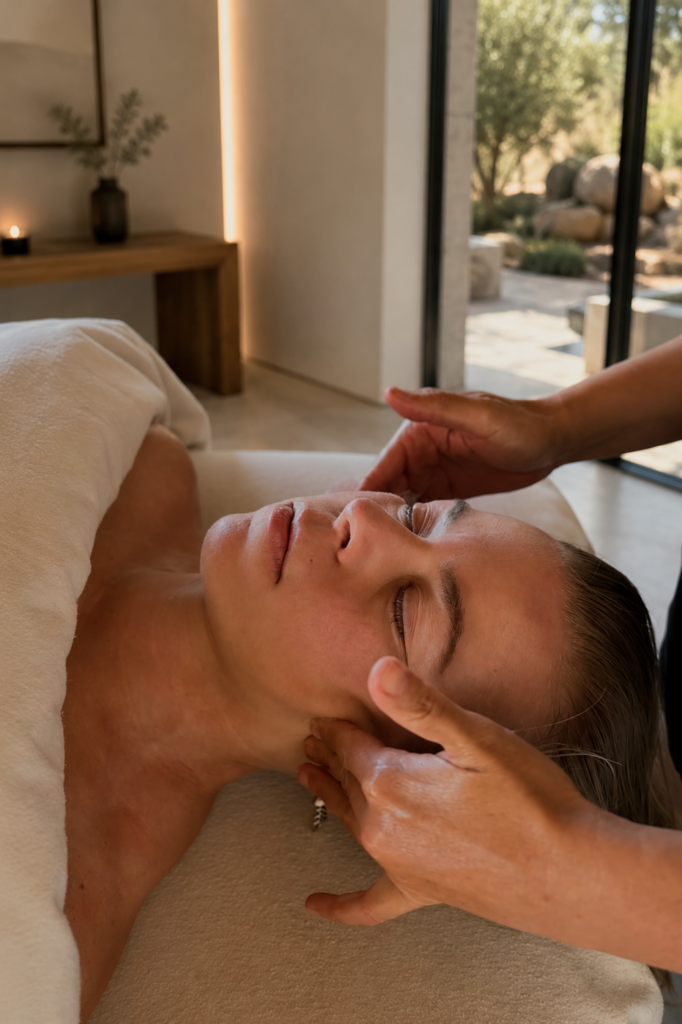
People carry stress in:
The neck
The jaw
The brow
Around the eyes
The scalp
When someone finally slows down enough to receive attentive touch to the face and head, the body often shifts into a more parasympathetic state, meaning the “rest and restore” side of the nervous system.
That’s one reason facial gua sha feels so different when integrated into a full-body wellness experience instead of rushed through as a beauty add-on.
Why We Include Facial Gua Sha in Our Signature Spa Immersion
At Sparrow Massage Sedona, we include facial gua sha in our Signature Spa Immersion because we wanted the experience to feel restorative, not transactional.
Our immersions are designed to support:
- Deep relaxation
- Nervous system downregulation
- Facial and jaw tension relief
- Lymphatic support
- Full-body restoration
The facial component is often the part guests talk about most afterward because so many people do not realize how much tension they are holding in their face until it finally softens.
Especially during:
- Girls trips
- Retreat weekends
- Stressful seasons
- Long travel days
- Burnout recovery
- Wedding weekends
- Chronic jaw clenching
Sometimes the goal is not dramatic transformation.
Sometimes the goal is simply:
- breathing easier,
- unclenching your jaw,
- releasing pressure behind the eyes,
- and finally feeling like your body can exhale.
And that is exactly why we include it.